Let’s be honest. Budgeting has a bit of a reputation.
People imagine complicated spreadsheets, endless tracking, and the feeling that every small treat has to be approved by a calculator first.
No wonder so many people avoid it.
But the truth is budgeting does not have to feel restrictive. In fact, the right budgeting system can actually make money feel less stressful, not more.
That is exactly why the 50/30/20 rule has become one of the most popular budgeting methods around.
It is simple. It is flexible. And it works in real life.
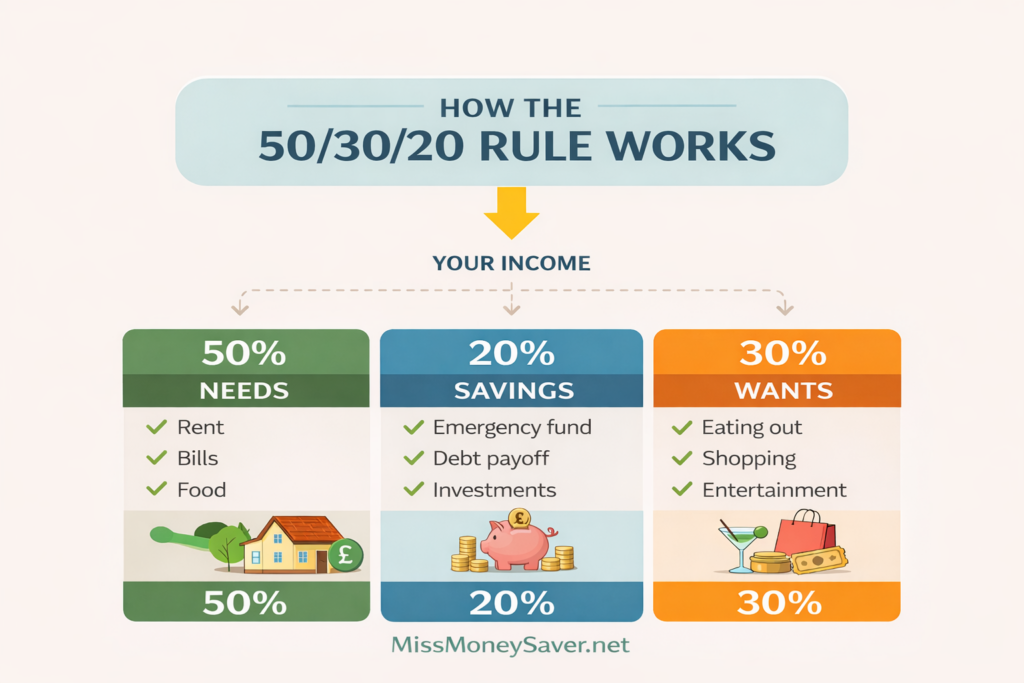
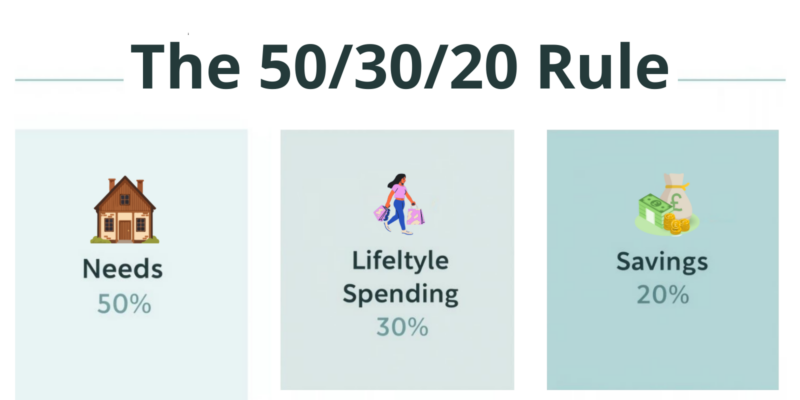
Instead of tracking every penny, the 50/30/20 rule simply gives your income three jobs. Once you know roughly where your money should go, it becomes much easier to stay in control.
If you prefer something simple to get started, a budget planner notebook or a basic budget calculator can make it much easier to see where your money is going each month without overcomplicating things.
If you are looking for practical UK money saving tips, budgeting is one of the best places to start. Once you understand your spending patterns, saving money becomes far easier.
Many people begin by focusing on how to track and control their spending. Once you can clearly see where your money is going each month, it becomes much easier to organise your budget and make smarter financial decisions.
Let’s break down how the 50/30/20 rule works and why so many people swear by it.









22 Comments
Simon Allen
15 March 2026 at 11:43 PM -Sound advice as always!
Miss Money Saver
16 March 2026 at 1:46 AM -Thank you, I really appreciate that.
It’s all about keeping things simple and realistic so it actually works long term.
There are a few other posts on my blog that build on this and go a bit deeper. Definitely worth checking those out as well.
Pamtay
16 March 2026 at 7:25 AM -Sometimes it’s overwhelming where to start
Miss Money Saver
16 March 2026 at 5:04 PM -I agree, best way is to start a plan. Start with your goal & then wrote down small steps to achieve it. Do them 1 at a time. You’ll reach that goal
Subscribe to my newsletter for tips/tricks & access to the freebie library. It may help you
Jed Harper
16 March 2026 at 11:19 AM -This structure is useful as you do not have to think about how much is too much or little to spend on certain things.
Miss Money Saver
16 March 2026 at 5:01 PM -Thank you Jed, that’s exactly what makes it work so well.
It takes the guesswork out of budgeting and keeps things really clear.
Using this budget planner notebook makes it even easier to set everything up and stay on track.
Definitely worth using alongside it.
Ritchie Dee
16 March 2026 at 3:20 PM -That’s good advice.
Miss Money Saver
16 March 2026 at 5:07 PM -Thank you, I’m glad you found it helpful.
Is budgeting something you’re already doing, or just getting started?
Valerie Seal
16 March 2026 at 6:05 PM -Comprehensive
Miss Money Saver
16 March 2026 at 9:49 PM -Thank you, I’m glad you found it comprehensive,
Is budgeting something you’re already doing, or just starting out?
Sheena Batey
16 March 2026 at 6:34 PM -All very helpful advice which a lot of people could easily put into use
Miss Money Saver
16 March 2026 at 9:48 PM -Thank you, I’m really glad you found it helpful
It’s one of those methods that’s simple but really effective once you get into it
I’ve got other budgeting posts on the site that break things down even further
Definitely worth checking those out next
Priscilla Stubbs
17 March 2026 at 10:08 AM -I hadn’t heard of the 50/30/20 budgeting rule. Interesting and it’s worth a try
Miss Money Saver
17 March 2026 at 10:50 AM -Thanks, I’m glad it gave you something new to try.
It’s a really easy way to structure your money without overcomplicating things.
I’ve got other posts that help with tracking and managing your spending day to day.
Definitely worth checking those out before you start.
Sweetpanda
17 March 2026 at 7:28 PM -Thank you defo giving a try!
Miss Money Saver
17 March 2026 at 7:51 PM -Love that, it’s such a good method once you get into it.
It works really well when you can actually see where your money is going.
This Budget Planner makes it much easier to set up and stick to.
Definitely worth using alongside it.
Thomas Riley
18 March 2026 at 10:55 AM -The 50/30/20 rule sounds like it would work great for my current lifestyle. Thank you so much for your hard work on this amazing article.
Miss Money Saver
18 March 2026 at 4:47 PM -Thank you so much, that means a lot.
It’s great that it fits your lifestyle too, that’s when it really works.
This Budget Planner is really helpful for setting things up properly and staying on track.
Definitely worth using alongside it.
William Gould
19 March 2026 at 2:24 PM -Retired and downsized now so more like 45-10-45 😀
Miss Money Saver
19 March 2026 at 7:56 PM -Love that, adjusting it to fit your lifestyle is exactly how it should work.
It’s all about making it realistic for your situation rather than sticking to fixed percentages.
Using this budget planner notebook can really help you map that out and keep everything balanced.
Megan Kinsey
21 March 2026 at 1:23 AM -I’d try to adjust where I can to increase the saving % and include some investing in there too!
Miss Money Saver
23 March 2026 at 7:06 PM -That’s a great way to build it into something that works even better for you.
Increasing your savings and adding investing is a really strong move once you’ve got the basics in place.
Using this budget planner notebook can help you adjust your percentages and keep everything balanced as you go.