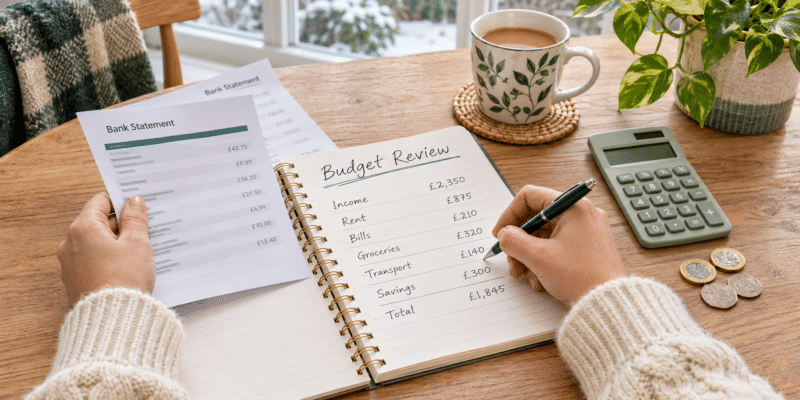
As another year comes to an end, it’s the perfect time to take a fresh look at your money. An annual budget clean-up can help you understand where your money has gone, identify unnecessary expenses and prepare for a more organised financial year.
And don’t worry, I’m not suggesting you spend hours studying spreadsheets or give up everything you enjoy!
Sometimes, the smallest changes make the biggest difference.
Perhaps you’ve forgotten about a subscription, your food shopping has become more expensive or your savings haven’t grown as much as you’d hoped. Whatever your situation, now is a good opportunity to make some adjustments.
The good news? You don’t need to be a budgeting expert to get started.
In this guide, I’ll walk you through practical ways to review your finances, cut unnecessary costs and create a realistic budget that works for you.
So, grab a cuppa, open your banking app and let’s give your finances a well-deserved tidy-up!
Why an Annual Budget Clean-Up Is Worth Doing
It’s easy to get into the habit of paying bills, buying groceries and spending money without giving everything much thought.
However, those little expenses can gradually add up.
An annual budget clean-up gives you the opportunity to look at the bigger picture. Instead of worrying about every purchase, you can focus on what your money is doing for you.
What Can a Yearly Budget Reset Help You Achieve?
Taking time to review your finances can help you:
Identify subscriptions and payments you no longer need.
Spot areas where your spending has increased.
Check whether you’re getting good value from household bills.
Understand how much money you can realistically save.
Prepare for upcoming expenses.
Set achievable financial goals for the new year.
For example, cancelling two unused subscriptions costing £8 and £12 per month would save £240 over a full year.
That’s £240 you could put towards an emergency fund, Christmas savings or something you’ve been planning to buy.
My money-saving tip: Don’t think of your financial review as a way to punish yourself for past spending. Think of it as an opportunity to make your money work harder for you.
Step 1: Review Your Income and Spending
Before making changes, you need to understand your current financial position.
Start by checking your bank statements or banking app for the past three months. If your spending changes significantly throughout the year, look back further where possible.
Write Down Your Monthly Income
Include any regular money coming into your household, such as:
Wages or salary after deductions.
Pension income.
Benefits or other financial support.
Regular additional income.
Contributions towards shared household expenses.
If your income changes each month, consider using a cautious estimate based on your lower-earning months.
This makes it easier to avoid budgeting with money that might not arrive.
Separate Essential and Non-Essential Spending
Next, look at where your money goes.
Essential expenses might include rent or mortgage payments, council tax, utilities, basic groceries, transport and necessary insurance.
Non-essential expenses might include streaming subscriptions, takeaways, entertainment, impulse purchases and optional memberships.
Of course, that doesn’t mean you need to cancel every enjoyable expense!
The aim is to identify what you genuinely use and value.
Look for Spending Patterns
You might discover that several small purchases are taking a bigger chunk of your budget than expected.
For instance, spending £5 on extras three times a week adds up to approximately £780 over 52 weeks.
You don’t necessarily need to stop those purchases completely. However, becoming more aware gives you the option to spend differently.
My money-saving tip: Start with your three biggest areas of avoidable spending. They may offer more useful savings than trying to cut twenty tiny expenses at once.

Step 2: Cancel, Reduce or Renegotiate Regular Payments
One of the easiest places to look for savings is your regular payments.
Subscriptions and direct debits can be particularly easy to overlook because the money leaves your account automatically.
Check Your Subscriptions
Go through your bank statements and make a list of everything you pay for regularly.
Look for:
Streaming services.
Music subscriptions.
Fitness memberships.
Paid mobile apps.
Online storage.
Magazine subscriptions.
Subscription boxes.
Any free trials that became paid services.
Ask yourself three questions:
Do I still use it?
Am I getting good value?
Could I find a cheaper alternative?
If something no longer serves a purpose, consider cancelling it.
Remember to check cancellation terms before making changes.
Review Household Bills
Next, review your broadband, mobile phone, insurance and energy arrangements.
Check whether contracts are ending and whether suitable cheaper deals are available.
However, don’t automatically switch based on the headline price. Compare the full cost, service quality, contract length and any exit fees.
For energy, consider your tariff, standing charges and unit rates, rather than assuming one supplier will always be cheaper.
Calculate Your Potential Savings
If you reduce your mobile bill by £7 per month and save £10 on another service, that’s £204 over a year.
The important part is making sure the changes suit your circumstances.
My money-saving tip: Put contract renewal dates in your calendar with a reminder a few weeks beforehand. That way, you’ll have time to compare deals before renewing.

Step 3: Give Your Food Shopping Budget a Reset
Food shopping is another area worth reviewing during your annual budget clean-up.
Prices change, shopping habits develop and those occasional extras can quietly become regular purchases.
However, saving money on food doesn’t have to mean eating boring meals or buying the cheapest option every time.
Check What You’re Spending
Start by adding up your supermarket spending over the past month.
Remember to include smaller top-up shops, convenience stores and any food deliveries.
Then ask yourself:
Am I shopping more often than necessary?
Do I regularly throw away unused food?
Am I buying items simply because they’re on offer?
Could I use more ingredients I already have?
Would planning a few meals help reduce extra shopping trips?
Make Better Use of What You Already Have
Before your next food shop, check your fridge, freezer and cupboards.
You might already have enough ingredients for several meals.
For example, frozen vegetables, rice, pasta and cupboard staples can often form the basis of affordable meals.
Planning around existing ingredients helps reduce food waste and unnecessary spending.
Set a Realistic Food Budget
If you’re currently spending £400 per month, don’t immediately set a £200 target.
Instead, consider whether you could reduce spending by £20 or £30 without making life difficult.
A £25 monthly saving would add up to £300 across a year.
My money-saving tip: Keep a short list of affordable meals your household enjoys. It makes meal planning easier when you’re busy or short on inspiration.

Step 4: Check Your Debts and Build a Financial Safety Net
A financial reset isn’t just about reducing spending. It’s also an opportunity to check your debts and savings.
You don’t need to solve everything immediately. Even understanding where you stand is useful progress.
Review Any Outstanding Debts
Write down your balances, interest rates, minimum payments and repayment dates.
This might include:
Credit cards.
Personal loans.
Overdrafts.
Buy Now, Pay Later balances.
Other borrowing.
Make sure essential household bills and priority payments remain covered.
If you can afford to make additional debt repayments, paying more towards expensive borrowing may reduce the amount of interest you pay.
However, always check the terms of your borrowing and whether early repayment charges apply.
If you’re struggling with repayments or falling behind on essential bills, seek free debt advice rather than taking on more borrowing to cover the shortfall.
Review Your Emergency Savings
Unexpected expenses have a habit of appearing when we least expect them.
A broken appliance, urgent car repair or temporary loss of income can quickly disrupt your finances.
That’s why having some money set aside can make a difference.
If you don’t currently have an emergency fund, start with an achievable target.
It might be £100, £250 or another amount that suits your circumstances.
For example, saving £5 per week would build up to £260 over 52 weeks.
Once you’ve reached your first target, you can gradually increase it.
Create Separate Savings Pots
Consider setting aside money for predictable but irregular expenses, such as:
Birthdays.
Christmas.
Car maintenance.
Annual insurance.
Home repairs.
Holidays.
These are sometimes called sinking funds.
By saving a little throughout the year, you can reduce the pressure when larger expenses arrive.
My money-saving tip: Treat saving as a regular expense where possible. Even a small automatic transfer can help you build consistency.

Step 5: Create a Fresh Budget for the New Year
Now that you’ve reviewed your finances, it’s time to put everything together.
The best budget isn’t necessarily the strictest. It’s the one you can realistically follow.
Start With Your Essential Expenses
Work out how much money you need each month for your essential commitments.
Next, allocate money towards debt repayments, savings and irregular expenses.
Finally, decide how much remains for everyday spending and activities you enjoy.
Remember to allow some flexibility.
A budget that leaves absolutely no room for unexpected expenses or occasional treats may become difficult to maintain.
Choose a Budgeting Method That Suits You
There are several ways to organise your finances.
Pen and paper: Ideal if you prefer physically writing things down.
Budgeting spreadsheet: Helpful if you like tracking figures and comparing spending.
Banking app: Convenient for checking balances and transactions.
Printable budget planners: Useful if you want a structured way to organise income, expenses and goals.
There’s no single correct approach.
Personally, I think the easiest system to maintain is usually the most effective.
Make Your Budget Work With Payday
If you’re paid monthly, try reviewing your budget shortly after payday.
For weekly or four-weekly pay, use a system that matches when your income arrives.
Also, remember that some months will be more expensive than others.
Christmas, holidays and annual renewals may require additional planning.
My money-saving tip: Set aside 10 minutes each week to check your spending. It’s much easier to spot a problem early than discover it several months later.

Step 6: Set Three Realistic Money Goals
Once you’ve completed your yearly budget reset, think about what you’d like your money to achieve.
You don’t need a complicated financial plan or a long list of resolutions.
In fact, focusing on just three goals can make the process feel much more manageable.
Goal 1: Reduce an Unnecessary Expense
Choose one regular payment you can cancel, reduce or renegotiate.
For example, aim to save £10 per month by reviewing your subscriptions.
Goal 2: Build Your Savings
Choose an achievable savings target.
That might mean building a £300 emergency fund or saving £20 per month towards Christmas.
The important thing is choosing a target that fits your income and commitments.
Goal 3: Improve One Spending Habit
Perhaps you’d like to:
Plan meals before shopping.
Reduce impulse purchases.
Check your bank balance weekly.
Compare prices before renewing contracts.
Save some of your cashback instead of spending it.
Choose something small enough to become a regular habit.
Then review your progress every month.
My money-saving tip: Write down your goals somewhere visible. Seeing them regularly can help keep you focused without putting unnecessary pressure on yourself.
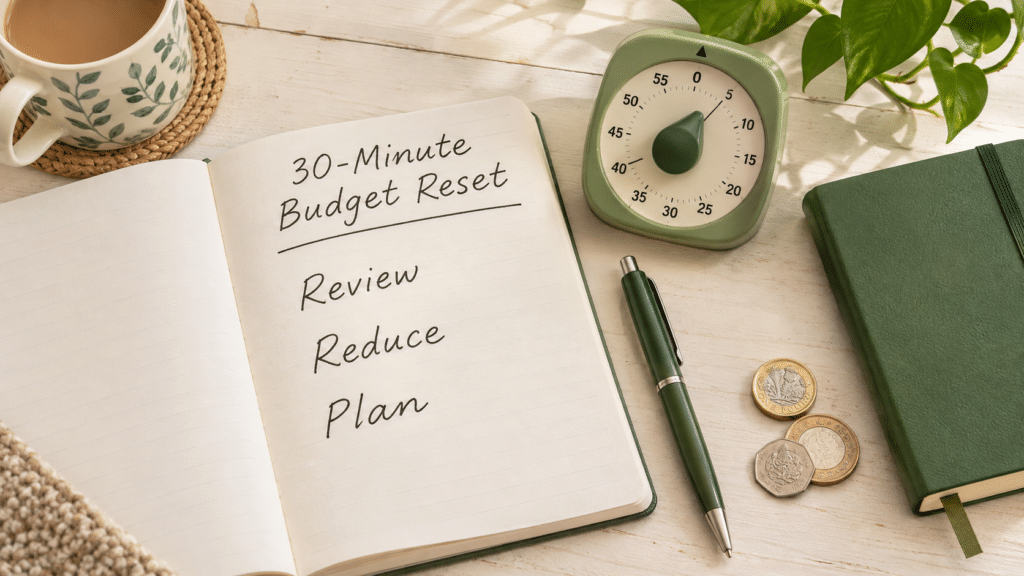
Your 30-Minute Annual Budget Clean-Up
You can make a useful start in just 30 minutes. Set a timer, grab a notebook and work through these three simple steps.
First 10 Minutes: Review
Check your current account balance.
Review your recent income.
Look through regular payments.
Identify unnecessary subscriptions.
Check upcoming expenses.
Next 10 Minutes: Reduce
Identify one expense you can cancel.
Find one bill worth comparing.
Look for ways to reduce your food bill.
Choose one spending habit to change.
Final 10 Minutes: Plan
Set a realistic monthly budget.
Decide on an achievable savings target.
Review any outstanding debt repayments.
Write down three financial goals.
Schedule your next budget review.
Remember, you do not need to complete everything in one sitting. Even spending 30 minutes reviewing your finances can help you identify savings and prepare for the year ahead.

Make Your Financial Reset Easier With My Smart Money Reset Kit
If you prefer having everything organised in one place, my Smart Money Reset Kit can help you put these steps into practice.
It’s designed to make budgeting feel more manageable, with practical printable worksheets to help you review your spending and plan ahead.
You can use the kit to:
Organise your income and expenses.
Review your regular household bills.
Identify opportunities to cut costs.
Track your savings.
Plan financial goals.
Reflect on your money-saving progress.
You don’t need to complete every worksheet at once.
Start with the areas most relevant to you and gradually build a routine that works.
Explore the Smart Money Reset Kit and my other money-saving printables at MissMoneySaver.net.
A little organisation today could make managing your money much easier throughout the year.

An annual budget clean-up is an opportunity to understand your spending, reduce unnecessary costs and prepare your finances for the year ahead.
You do not need a perfect budget. Start with small, achievable changes and build financial habits that work for you.
If you found this guide helpful, share it with someone who could benefit from a financial fresh start.
What is the first change you plan to make to your finances in 2027?

An annual budget clean-up doesn’t need to be complicated. Here are some common questions to help you get started.
How often should I review my budget?
A full review once a year is useful, but checking your budget monthly is even better.
Regular reviews help you spot changes in spending and adjust your plans before problems develop.
What if I don’t have any money left to save?
Start by understanding your income and essential expenses.
If your budget is already stretched, don’t put pressure on yourself to save an unrealistic amount.
Focus on checking your bills, reviewing entitlements and finding support where needed.
Should I cancel all my subscriptions?
Not necessarily!
Keep the services you genuinely enjoy and can comfortably afford.
The goal is to remove unnecessary spending, not eliminate everything that makes life enjoyable.
Can I complete a budget reset if I have debts?
Absolutely.
In fact, understanding your borrowing and repayment commitments is an important part of managing your finances.
If you’re struggling with repayments, seek free debt advice before committing to additional payments.
Do I need a special budgeting app?
No.
You can use a notebook, spreadsheet, banking app or printable planner.
Choose whichever method is easiest for you to maintain.
When is the best time to start an annual budget clean-up?
December is a great opportunity to review the past year and prepare for January.
However, you can start at any time. There’s no need to wait until the new year to improve your financial habits.

Explore these helpful guides and practical tools to support your annual budget clean-up.
Miss Money Saver Downloads
Discover free and extended printable planners, including my Smart Money Reset Kit, to help you organise your finances and build better money habits.
The 50/30/20 Rule: A Simple Guide to Budgeting
Discover a straightforward budgeting method to help you balance essential expenses, savings and everyday spending.
Smart Money Moves
Sign up for my newsletter and receive your free Smart Money Moves book, packed with practical ways to save and make your money go further.
MoneyHelper Budget Planner
Use this free budgeting tool to review your income, track your expenses and create a realistic household budget.

If you found this guide helpful, share it with someone who could benefit from resetting their finances.
Use the share buttons below and include #MissMoneySaver to help others discover practical ways to save money.
Have you started your annual budget clean-up yet? Let me know in the comments below.
This post contains affiliate links, which means I may receive a small fee if you sign up for some of the products or services recommended, at no extra cost to yourself.