Let’s be honest. Budgeting has a bit of a reputation.
People imagine complicated spreadsheets, endless tracking, and the feeling that every small treat has to be approved by a calculator first.
No wonder so many people avoid it.
But the truth is budgeting does not have to feel restrictive. In fact, the right budgeting system can actually make money feel less stressful, not more.
That is exactly why the 50/30/20 rule has become one of the most popular budgeting methods around.
It is simple. It is flexible. And it works in real life.
Instead of tracking every penny, the 50/30/20 rule simply gives your income three jobs. Once you know roughly where your money should go, it becomes much easier to stay in control.
If you prefer something simple to get started, a budget planner notebook or a basic budget calculator can make it much easier to see where your money is going each month without overcomplicating things.
If you are looking for practical UK money saving tips, budgeting is one of the best places to start. Once you understand your spending patterns, saving money becomes far easier.
Many people begin by focusing on how to track and control their spending. Once you can clearly see where your money is going each month, it becomes much easier to organise your budget and make smarter financial decisions.
Let’s break down how the 50/30/20 rule works and why so many people swear by it.

What Is the 50/30/20 Rule
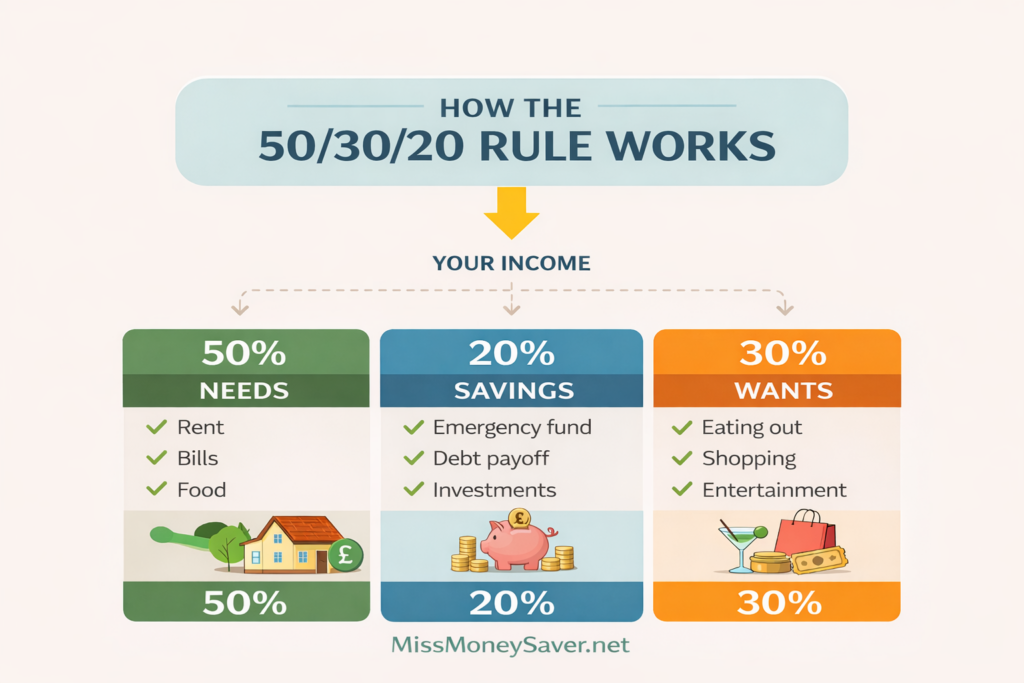
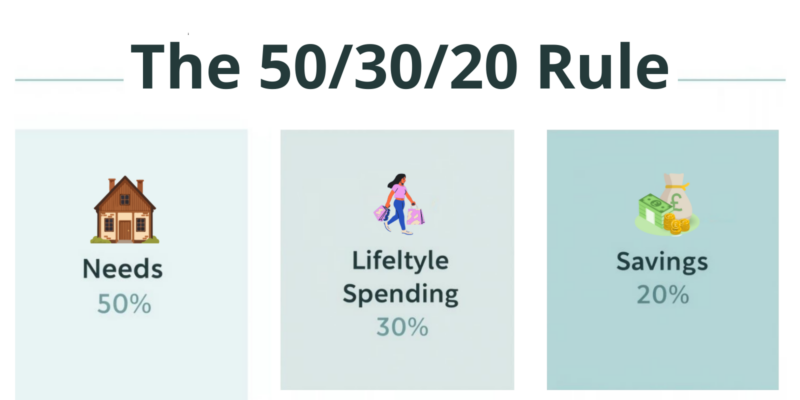
The 50/30/20 rule is a simple budgeting method that divides your after-tax income into three clear categories: needs, savings and wants.
• 50 percent for needs – essential living costs like housing, bills and food
• 20 percent for savings or debt repayment – building financial security
• 30 percent for wants – lifestyle spending such as entertainment or hobbies
That’s it.
No complicated categories. No endless spreadsheets. Some people find it helpful to use a printed budgeting planner or a simple financial organiser to keep everything in one place and stay consistent each month. Just a clear structure that keeps your spending balanced.
The graphic below shows how the 50/30/20 rule divides your income into three clear categories
Once you see the rule laid out visually, it becomes much easier to understand why it works so well.
Each part of your income has a clear purpose.
The 50 Percent: Covering Your Needs
This is the boring bit of life… but also the unavoidable bit.
Your needs are the things you have to pay for whether you feel like it or not. Think roof over your head, food in the fridge, lights on, and getting yourself to work.
Typical examples include:
• Rent or mortgage
• Council tax
• Energy bills
• Food shopping
• Transport to work
• Insurance
• Minimum debt payments
Keeping track of these costs is much easier when everything is written down in one place. A monthly budget planner or household expense tracker can help you spot where money is creeping up.
The aim of the 50/30/20 rule is to keep these essentials to around half your income.
Now before anyone panics — that will not always be perfect. Some months life throws things at you. But having this guideline helps you spot when costs start creeping up.
If your “needs” suddenly start swallowing most of your income, that is usually a signal to pause and look at where money might be leaking.
If you want to bring those costs down, read my guide on how to save money on your bills — it shows you exactly where you can cut back without overcomplicating things.
Sometimes the fix is surprisingly simple.
A tariff switch.
A cheaper insurance renewal.
Being a bit smarter with the weekly food shop by learning how to save money on your food bill can free up more money than people expect.
The 30 Percent: The Fun Stuff
This is the category that stops budgeting from feeling miserable.
The 30 percent section covers all the things that make life enjoyable but are not strictly essential.
Examples include:
• Eating out
• Shopping
• Streaming services
• Days out
• Hobbies
• Holidays
Budgets that remove all enjoyment usually collapse within a few weeks.
People are human. We like treats. Setting a clear spending limit for this category is easier when you can see it visually. Some people use a budget tracker notebook or even a cash envelope system to stay on trac
The beauty of the 50/30/20 rule is that it builds enjoyment into the plan.
Your essentials are covered. Your future is protected. And you still have room to enjoy your money without guilt.
That balance is exactly why so many people stick with this method.
The 20 Percent: Strengthening Your Money
This part of the budget is where your future self quietly says thank you.
One of the first priorities many people focus on is learning how to build an emergency fund even on a tight income so unexpected expenses do not throw their finances off track.
The idea behind the 20 percent section is simple. A portion of your income should always be working to make your financial situation stronger.
That could mean saving.
It could mean clearing debt faster.
It could mean building a safety cushion so life’s surprises are less stressful.
Examples include:
• Emergency savings
• Extra credit card payments
• Paying off loans quicker
• Investing
• Pension contributions
Using a Savings tracker or debt payoff planner can make progress feel more visible and keep you motivated as your balances start to drop.
Life has a habit of throwing expensive surprises at people. Cars break. Boilers pack up. Unexpected bills appear.
Having money set aside means those moments are frustrating rather than financially terrifying.
And if you are currently paying down debt, using this portion to chip away at balances faster can make a huge difference over time.
Why So Many People Love the 50/30/20 Rule
Most budgeting systems fall apart for one simple reason.
They are too complicated.
Tracking dozens of categories, logging every coffee, checking spreadsheets constantly… it becomes exhausting very quickly.
The 50/30/20 rule works because it focuses on the bigger picture.
Instead of worrying about every pound, you are simply making sure your money is roughly balanced between three priorities.
It gives you:
• A simple structure
• Clear spending boundaries
• Built-in saving habits
• Flexibility for real life
Once you understand the three sections, you can glance at your spending and quickly see whether things are roughly on track.
How to Start Using the 50/30/20 Rule
Getting started is much easier than people expect.
First, work out how much money you bring home each month after tax.
Then divide it roughly like this:
50 percent for needs
20 percent for savings
30 percent for wants
Do not stress if your numbers are not perfect straight away.
Most people need a few months to shuffle things around and find their rhythm.
The goal is not perfection. The goal is awareness.
Once you can clearly see where your money is going, it becomes much easier to steer it where you actually want it to go.
More Money Guides That Can Help You Save
If you are starting to organise your finances, a simple budgeting method like the 50/30/20 rule can make a big difference.
Once you have a structure in place, building a few extra money habits can make managing your finances much easier.
If saving feels difficult, learning how to build an emergency fund even on a tight income can help create a financial safety net that protects you from unexpected expenses.
Another helpful step is finding ways to reduce everyday spending. These batch cooking tips to stretch your food budget and show how planning meals in advance can significantly cut your weekly food costs.
And if you want a wider range of practical ideas, this digital guide with over 100 ways to save and earn money shares realistic strategies that many readers have used to improve their finances.
Budgeting does not have to feel complicated or restrictive.
The 50/30/20 rule gives you a simple way to organise your money without endless tracking or spreadsheets.
Cover the essentials.
Strengthen your future.
Still enjoy your money.
That balance is what makes this budgeting method so powerful.
If you have never tried budgeting before, the 50/30/20 rule is a great place to start.
A new competition is coming soon.
Click the competition banner, bookmark the page and check back regularly so you do not miss when it goes live.
Many people discover the 50/30/20 rule when they first start learning about budgeting. These quick answers cover some of the most common questions.
Is the 50/30/20 rule good for beginners?
Yes. The 50/30/20 rule is one of the easiest budgeting methods to understand because it focuses on three simple categories rather than dozens of detailed ones.
What if my needs are more than 50 percent?
This is very common, especially with housing costs. The rule is a guideline rather than a strict formula. The goal is to gradually move spending closer to balance over time.
Can I change the percentages?
Yes. Some people adapt the rule depending on their financial situation. For example, someone paying off debt quickly might temporarily increase the savings percentage.
Further reading and related guides.
MoneyHelper – Budgeting advice and tools
MoneyHelper provides trusted UK guidance on creating a realistic budget, understanding spending habits and improving financial planning.
National Debtline – Making the Most of Your Money Guide
A practical UK guide explaining how to organise your finances, prioritise bills and build a workable household budget.
If this guide helped you understand the 50/30/20 rule, share it with someone who might find it useful too.
Use the share buttons below and tag #MissMoneySaver so others can discover simple ways to manage their money.
What budgeting method works best for you? Leave a comment below and share your experience.
This post contains affiliate links, which means I may receive a small fee if you sign up for some of the products or services recommended, at no extra cost to yourself.
22 Comments
Simon Allen
15 March 2026 at 11:43 PM -Sound advice as always!
Miss Money Saver
16 March 2026 at 1:46 AM -Thank you, I really appreciate that.
It’s all about keeping things simple and realistic so it actually works long term.
There are a few other posts on my blog that build on this and go a bit deeper. Definitely worth checking those out as well.
Pamtay
16 March 2026 at 7:25 AM -Sometimes it’s overwhelming where to start
Miss Money Saver
16 March 2026 at 5:04 PM -I agree, best way is to start a plan. Start with your goal & then wrote down small steps to achieve it. Do them 1 at a time. You’ll reach that goal
Subscribe to my newsletter for tips/tricks & access to the freebie library. It may help you
Jed Harper
16 March 2026 at 11:19 AM -This structure is useful as you do not have to think about how much is too much or little to spend on certain things.
Miss Money Saver
16 March 2026 at 5:01 PM -Thank you Jed, that’s exactly what makes it work so well.
It takes the guesswork out of budgeting and keeps things really clear.
Using this budget planner notebook makes it even easier to set everything up and stay on track.
Definitely worth using alongside it.
Ritchie Dee
16 March 2026 at 3:20 PM -That’s good advice.
Miss Money Saver
16 March 2026 at 5:07 PM -Thank you, I’m glad you found it helpful.
Is budgeting something you’re already doing, or just getting started?
Valerie Seal
16 March 2026 at 6:05 PM -Comprehensive
Miss Money Saver
16 March 2026 at 9:49 PM -Thank you, I’m glad you found it comprehensive,
Is budgeting something you’re already doing, or just starting out?
Sheena Batey
16 March 2026 at 6:34 PM -All very helpful advice which a lot of people could easily put into use
Miss Money Saver
16 March 2026 at 9:48 PM -Thank you, I’m really glad you found it helpful
It’s one of those methods that’s simple but really effective once you get into it
I’ve got other budgeting posts on the site that break things down even further
Definitely worth checking those out next
Priscilla Stubbs
17 March 2026 at 10:08 AM -I hadn’t heard of the 50/30/20 budgeting rule. Interesting and it’s worth a try
Miss Money Saver
17 March 2026 at 10:50 AM -Thanks, I’m glad it gave you something new to try.
It’s a really easy way to structure your money without overcomplicating things.
I’ve got other posts that help with tracking and managing your spending day to day.
Definitely worth checking those out before you start.
Sweetpanda
17 March 2026 at 7:28 PM -Thank you defo giving a try!
Miss Money Saver
17 March 2026 at 7:51 PM -Love that, it’s such a good method once you get into it.
It works really well when you can actually see where your money is going.
This Budget Planner makes it much easier to set up and stick to.
Definitely worth using alongside it.
Thomas Riley
18 March 2026 at 10:55 AM -The 50/30/20 rule sounds like it would work great for my current lifestyle. Thank you so much for your hard work on this amazing article.
Miss Money Saver
18 March 2026 at 4:47 PM -Thank you so much, that means a lot.
It’s great that it fits your lifestyle too, that’s when it really works.
This Budget Planner is really helpful for setting things up properly and staying on track.
Definitely worth using alongside it.
William Gould
19 March 2026 at 2:24 PM -Retired and downsized now so more like 45-10-45 😀
Miss Money Saver
19 March 2026 at 7:56 PM -Love that, adjusting it to fit your lifestyle is exactly how it should work.
It’s all about making it realistic for your situation rather than sticking to fixed percentages.
Using this budget planner notebook can really help you map that out and keep everything balanced.
Megan Kinsey
21 March 2026 at 1:23 AM -I’d try to adjust where I can to increase the saving % and include some investing in there too!
Miss Money Saver
23 March 2026 at 7:06 PM -That’s a great way to build it into something that works even better for you.
Increasing your savings and adding investing is a really strong move once you’ve got the basics in place.
Using this budget planner notebook can help you adjust your percentages and keep everything balanced as you go.