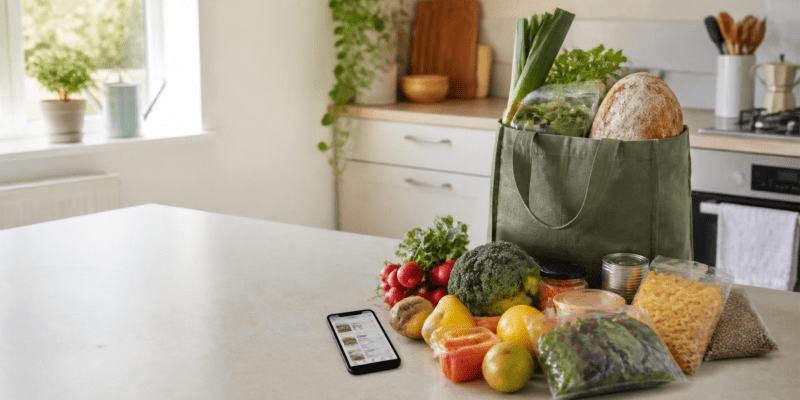
Food waste apps can be a surprisingly easy way to cut your grocery bill. Two of the best-known options in the UK are Too Good To Go and Olio. Although they work differently, both can help you get perfectly usable food for less and stop good food from going to waste.
The trick, however, is knowing how to use them effectively.
It is easy to download an app, look once, decide there is nothing nearby and forget about it. Instead, a few simple habits can make a big difference. You can learn when good offers appear, which collections are worth making and how to use what you collect without wasting money elsewhere.
Better still, these apps can work alongside your normal supermarket shopping rather than replacing it completely.
So, let’s look at how Too Good To Go and Olio work and how you can use them to make genuine savings on food.
What Is Too Good To Go?
Too Good To Go connects you with local businesses that have surplus food available.
Instead of perfectly good food being thrown away, participating cafés, bakeries, restaurants, supermarkets and other food businesses can offer it through the app.
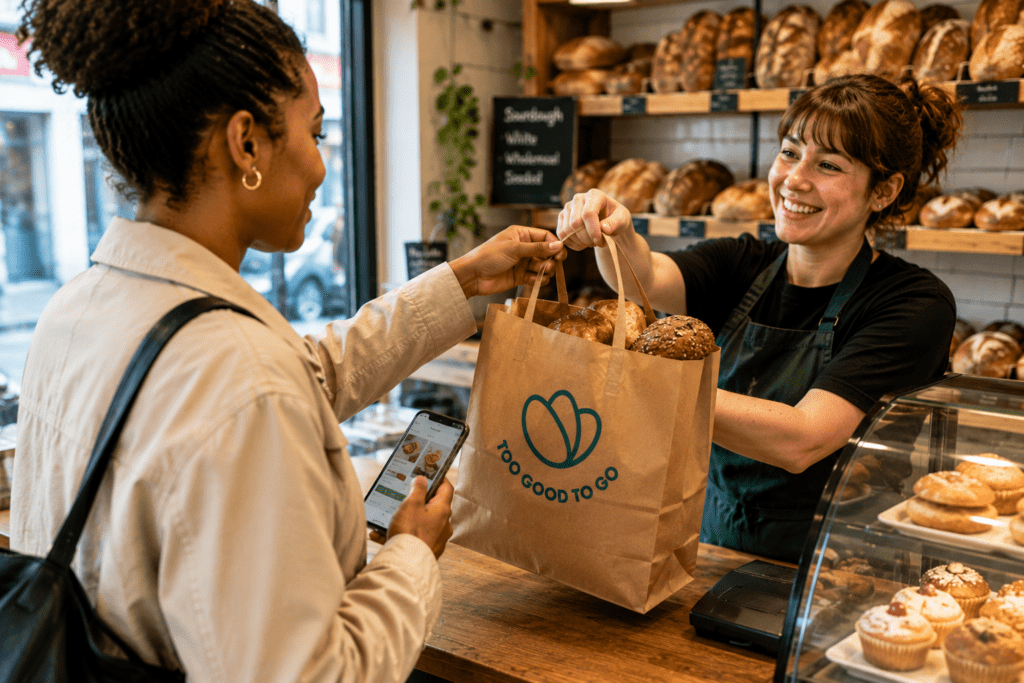
Most food is offered in a Surprise Bag. You reserve and pay for the bag in the app, then collect it from the business during the stated collection window.
As the name suggests, you usually will not know exactly what is inside beforehand.
That uncertainty is part of the deal. The food available depends on what the business has left at the end of that particular trading period.
You might receive:
- Bread and rolls
- Cakes and pastries
- Sandwiches
- Salads
- Ready meals
- Fruit and vegetables
- Grocery products
- Chilled foods
- Restaurant or takeaway food
Too Good To Go says Surprise Bags offer food at half the usual price or less, although the exact price and contents vary between businesses.
The app also now offers Too Good To Go Parcels. These contain surplus food from manufacturers or wholesalers and can be delivered to your home or a local pick-up point.
That gives you another way to rescue discounted food without relying solely on nearby Surprise Bags.
Miss Money Saver Tip
“Think of a Surprise Bag as a bonus rather than part of your essential weekly shop. If you need specific ingredients for dinner, buy those normally. Use Surprise Bags for flexible extras that can reduce what you need to buy later.”
How to Use Too Good To Go Effectively
Getting a cheap bag is not automatically a saving.
If you spend £4 on food your household will not eat, you have spent £4 rather than saved money.
Therefore, the aim is to find the businesses and types of bags that fit the way you already eat.
Start With Businesses You Already Use
When you first open the app, search your local area and see what is available.
You can browse nearby businesses and use filters to narrow your results. Too Good To Go also allows you to sort options by factors including distance, price and rating.
Start with places you recognise.
For example, if your household regularly eats bread, rolls and pastries, a bakery Surprise Bag may be useful. On the other hand, a restaurant bag containing food nobody in your household enjoys is unlikely to represent a genuine saving.
The more closely the bag matches food you would normally buy, the better its value to you.
Check the Ratings
Ratings can help you decide where to spend your money.
Do not judge a bag solely by its advertised value. Instead, look at how previous customers have rated their overall experience.
A well-rated collection that suits your household may be a much better choice than simply picking the cheapest bag available.
Once you find somewhere that works particularly well for you, save it as a favourite.
Too Good To Go has a Favourites section, so you can quickly check the places you like rather than searching from scratch every time.
Learn When Your Favourite Bags Appear
Popular Surprise Bags can disappear quickly.
Therefore, if you notice a favourite business tends to make bags available at a similar time, make a mental note.
You do not need to spend all day refreshing the app. Instead, check around the times that have previously worked for you.
Availability will vary because businesses cannot always predict exactly how much surplus food they will have.
However, learning the habits of your favourite locations can improve your chances.
Check the Collection Time Before Paying
This sounds obvious, but it can save you from an inconvenient purchase.
Surprise Bags have specific collection windows. Make sure you can realistically get there before you reserve one.
Also consider the cost of collecting it.
A £4 bag is far less impressive if you make a special journey and spend several pounds on fuel, parking or public transport.
Ideally, combine a collection with a journey you are already making.
You could collect on your way home from work, after visiting the supermarket or while you are already in town.
That way, more of the discount remains a genuine saving.
Have a Plan for the Food When You Get Home
A large Surprise Bag can feel like a bargain when you first open it.
However, some items may need eating quickly.
Check everything when you get home. Look at the dates and decide what needs eating first.
Then divide the food into three simple groups:
- Eat soon
- Refrigerate for later
- Freeze, where suitable
This takes a few minutes but can prevent your bargain from ending up in your own bin.
Bread, cakes and many prepared foods can often be frozen, depending on the product. Always check storage instructions and make sure the food is suitable for freezing.
Miss Money Saver Tip
“Before collecting a Surprise Bag, make some space in your freezer. Being able to freeze suitable extras can turn one cheap collection into food for several days rather than a race to eat everything at once.”

What Is Olio?
Olio is based around local sharing.
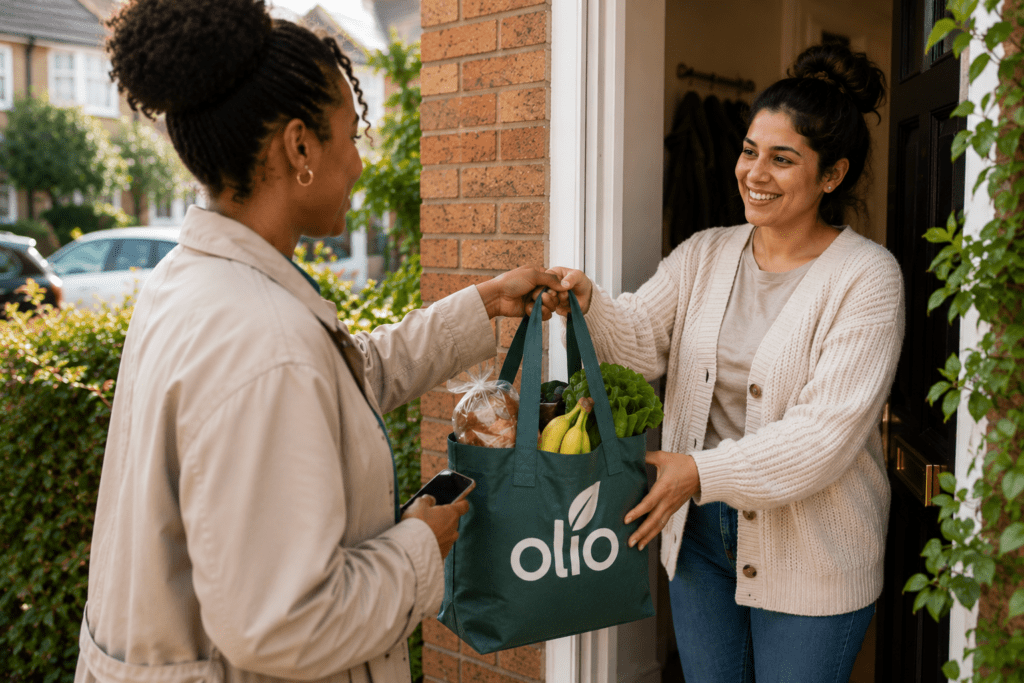
People can list food and other items they no longer need so that somebody nearby can use them instead.
Importantly, Olio is not limited to free food. The platform also includes non-food items and other ways of sharing. However, its Free Food listings are particularly useful when you are trying to cut your food bill.
Free food can come from individuals who have something they will not use. It can also come from Olio’s Food Waste Heroes.
Food Waste Heroes are volunteers who collect unsold surplus food from participating businesses and redistribute it through Olio.
Depending on what is available locally, you may come across items such as:
- Bread and bakery products
- Fruit and vegetables
- Chilled products
- Packaged groceries
- Drinks
- Cupboard ingredients
- Food someone has bought but will not use
Availability can vary enormously from one area to another. Therefore, it is worth checking the app at different times rather than judging it from one visit.
How to Use Olio Effectively
Olio works best when you treat it as a local community rather than an online supermarket.
There is no guarantee that the exact thing you want will appear when you need it.
However, if you stay flexible, it can provide useful additions to your normal food shop.
Check Regularly, But Buy Your Essentials Normally
If you need milk, vegetables and chicken for tonight’s dinner, do not rely on all three appearing on Olio.
Instead, shop for the things you genuinely need.
Then use Olio to supplement your shopping.
For example, if you collect bread, fruit or vegetables for free, you can remove similar items from your next shopping list.
Over several weeks, those small reductions can add up.
Keep Your Search Local
Free food is not much of a saving if collecting it costs more than the item itself.
Focus on listings that are genuinely convenient.
Walking to a nearby collection is ideal. Alternatively, collect when you are already travelling through that area.
This is particularly important for small listings.
Driving several miles to collect one low-cost grocery item rarely makes financial sense. However, picking it up from around the corner may be worthwhile.
Only Request What You Will Use
Free can be very tempting.
If five different items are available, it is easy to think, “I might as well have them.”
However, taking food you do not need can simply move the waste from one household to another.
Choose items you know you can eat, freeze, cook with or share.
Olio currently applies a rolling pick-up quota to Free Food listings. Users can pick up a maximum of 100 Free Food listings within a rolling 28-day period.
For most households, that is unlikely to be restrictive. Still, it reinforces an important principle: request useful food rather than collecting simply because something is free.
Be Reliable When Arranging Collections
When someone agrees to give you an item, make sure you collect it when arranged.
If something changes, send them a message.
Remember, the person listing the food may be giving up their own time to prevent it from going to waste.
Olio’s free-sharing system is designed around local, in-person collection. Free listings should not be used to request delivery or postage.
So, before requesting something, make sure you can collect it.
Miss Money Saver Tip
“If you are new to Olio, start with a small collection close to home. It lets you get used to how requests and collections work without travelling across town for something you may not actually need.”
Too Good To Go vs Olio: Which Is Better for Saving Money?
There is no need to choose one.
They solve slightly different problems.
Too Good To Go is useful when you are happy to pay a small amount for a larger selection of surplus food. You usually know the type of business you are buying from, but you may not know the exact contents of your Surprise Bag.
Olio’s Free Food section, meanwhile, allows you to request specific food that people or Food Waste Heroes have listed for free.
That means Olio can potentially cost you nothing apart from the time or travel involved in collection.
However, availability depends heavily on what people are sharing near you.
Using both gives you more opportunities.
You might collect a Too Good To Go bakery bag one evening, then find free fruit or vegetables on Olio later in the week.
The important part is to fit those collections around your normal meal planning.
Combine Food Waste Apps With Your Weekly Food Shop
This is where you can turn occasional bargains into consistent savings.
Before writing your next shopping list, check what you already have.
Include:
- Food in your fridge
- Food in your freezer
- Cupboard ingredients
- Recent Too Good To Go collections
- Anything collected through Olio
Then plan meals around those foods first.
For example, suppose you have collected bread, vegetables and a couple of bakery items.
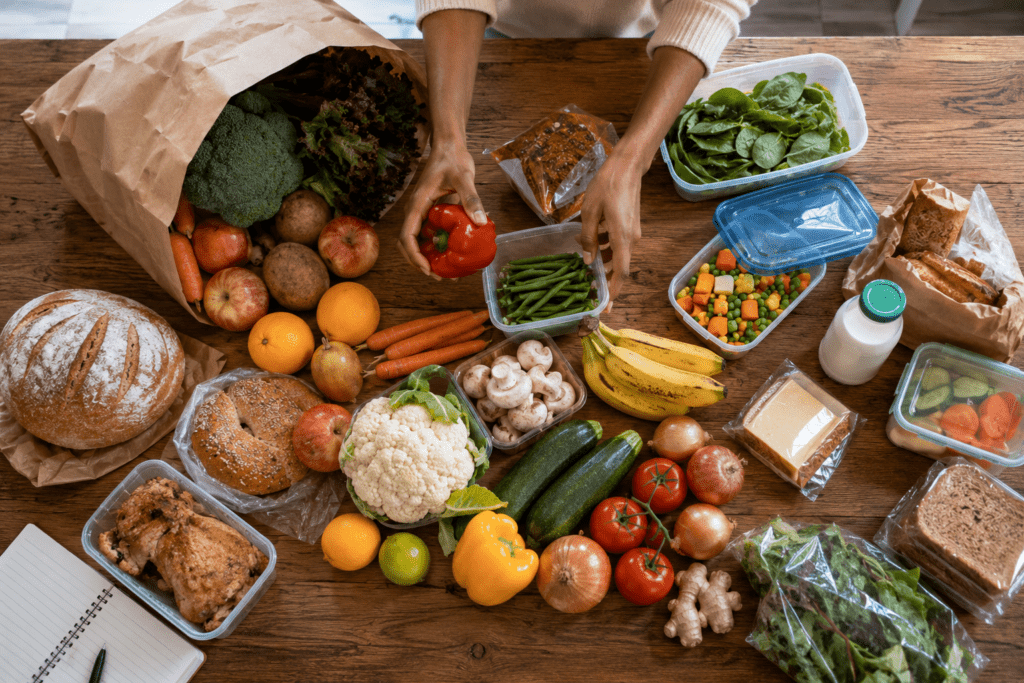
The bread could cover breakfasts or lunches. The vegetables could become part of a stir-fry, soup or pasta dish. Meanwhile, the bakery items could replace snacks you would otherwise buy.
Only after doing that should you complete your shopping list.
This helps you avoid buying duplicates.
You can also combine this approach with supermarket rewards and personalised offers. My guide to supermarket loyalty apps explains how to get more from the schemes you may already be using.
Miss Money Saver Tip
“Do your food-waste-app check before finalising your next shopping list, not after you’ve been shopping. That gives you a chance to use what you’ve collected and remove unnecessary purchases.”

Do Not Let a Bargain Encourage You to Spend More
There is one trap worth watching.
Money-saving apps can sometimes make spending feel like saving.
You see £12 worth of food advertised for £4 and immediately think you have saved £8.
But have you?
If you would never have bought those items at full price, £8 has not gone back into your bank account. You have simply bought £4 worth of food at a substantial discount.
That can still be excellent value.
However, the strongest savings happen when the food replaces something you would otherwise have bought.
The same principle applies to travelling for free Olio food. An item may cost £0, but collection still has a cost if you use fuel or pay for transport.
Always look at the real saving.
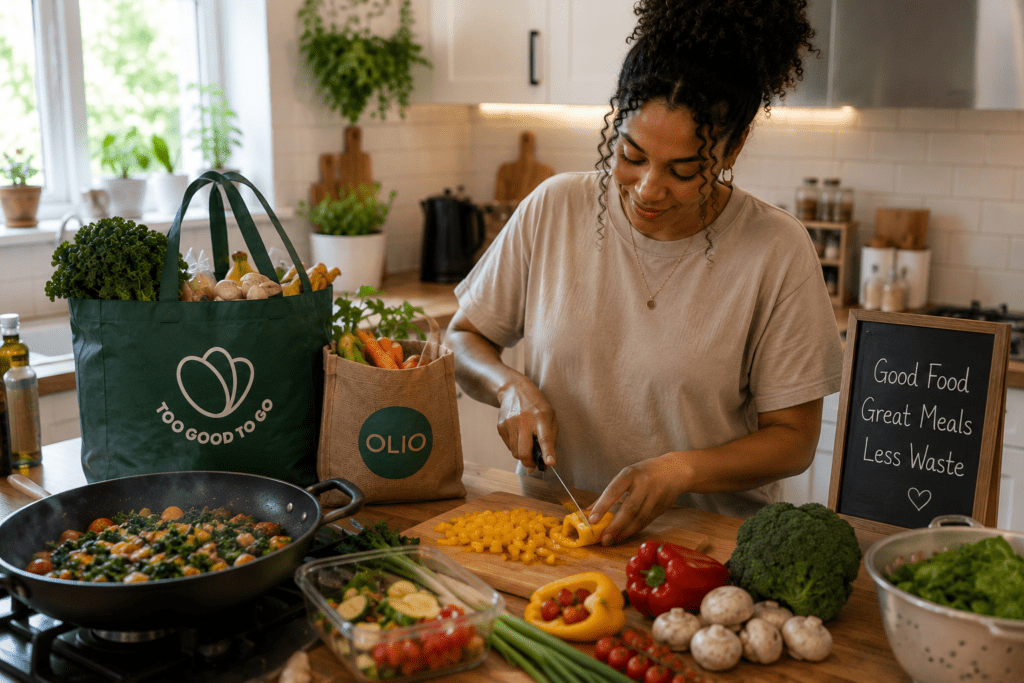
Make Your Collections Work Harder
Once you start using food waste saving apps regularly, you can become more creative with what you collect.
A bag of mixed vegetables can become soup.
Overripe fruit may work in smoothies, baking or homemade sauces.
Bread can be frozen in portions or used for toast, breadcrumbs and bread-based recipes.
Unexpected ingredients can also influence your meal plan for the next few days.
However, you do not have to turn every collection into a complicated cooking challenge.
Sometimes the smartest option is simply to freeze what you can and use it next week.
Keep a Simple Record of Your Savings
If you really want to know whether Too Good To Go and Olio are helping your budget, track them for a month.
You do not need a complicated spreadsheet.
Simply record:
- What you paid
- Any collection or travel cost
- What you received
- What you actually used
- What normal purchases the collection replaced
This gives you a much more realistic picture of your savings.
You may discover that one particular Surprise Bag consistently saves you money, while another looks impressive but rarely contains food you would normally buy.
Likewise, you may find that certain Olio collections fit perfectly into your weekly routine.
Once you know that, focus your attention on the options that genuinely work for you.
Small Food Savings Can Make a Real Difference
You do not have to collect surplus food every day for these apps to be worthwhile.
Even replacing a few purchases each month can help.
A free loaf here, discounted lunches there and the occasional bag of groceries can gradually reduce the amount coming out of your food budget.
More importantly, you are making use of food that already exists.
That is why Too Good To Go and Olio can work so well as part of a wider money-saving routine. You are not changing everything about the way you shop. Instead, you are adding another practical tool that can help you spend less.
Start locally, choose food you will genuinely use and pay attention to which collections give you the best value.
Those are the habits that turn a good deal into a real money win.

Too Good To Go and Olio will not replace your normal food shop, but they can become useful additions to your money-saving routine.
The biggest savings come when you use the food you collect to replace something you would otherwise have bought. Therefore, focus on collections close to home, choose food your household will genuinely eat and make good use of your freezer.
You do not need to use either app every day. Even a few successful collections each month could help reduce your food spending while preventing perfectly usable food from going to waste.
Try both apps and see what is available in your area. Over time, you will discover which businesses, collection times and Olio listings work best for you.
Have you used Too Good To Go or Olio? Let me know in the comments what you picked up and whether you thought it was worth it. I would love to hear about your best finds.

Still have questions about using Too Good To Go and Olio to save money on food? Here are some quick answers to common questions that can help you get more from both apps.
Is Too Good To Go actually cheaper?
Yes, provided you use the food you collect. Surprise Bags contain surplus food sold for considerably less than its original retail value. However, the real saving comes when the contents replace food you would otherwise have bought.
Is food on Olio free?
Olio has a Free Food section where people and Food Waste Heroes offer surplus food for free. The app also includes other types of listings, so check the individual listing before requesting an item.
Can you choose what you get from Too Good To Go?
Usually, no. Most Too Good To Go collections are Surprise Bags, so the contents depend on what the business has left. This is why they work best if you are flexible about what you receive.
Which is better, Too Good To Go or Olio?
Neither is necessarily better. Too Good To Go is useful for buying discounted surplus food from businesses, while Olio can help you find free surplus food being shared locally. Using both gives you more opportunities to save.
Can I freeze food from Too Good To Go or Olio?
Some foods can be frozen, but it depends on the individual product and whether it has previously been frozen. Always check the packaging, storage instructions and condition of the food first.

Want to explore more ways to make your food budget stretch further? These Miss Money Saver guides and trusted external resources offer practical advice on saving money, making the most of your food and reducing waste.
Budget Friendly Meal Solutions: Save Money on Your Food Bill: Practical ways to reduce your weekly food spend and make your grocery budget go further.
Smart Ways to Stretch Your Food Budget with Easy Batch Cooking: Useful ideas for making the most of surplus ingredients and turning them into meals for later.
Food Standards Agency: Best Before and Use-By Dates: Official guidance on date labels and food safety.
Love Food Hate Waste: Practical advice on food storage, leftovers and reducing household food waste.

Found this useful? Share it with friends or family who are looking for practical ways to cut their food bill.
You can also share this post on social media and tag #missmoneysaver. I would love to see what you managed to rescue and how much you saved.
This post contains affiliate links, which means I may receive a small fee if you sign up for some of the products or services recommended, at no extra cost to yourself.